The Inevitable Rise and Liberation of Niggy Tardust
by Fred Frio
Case you missed it
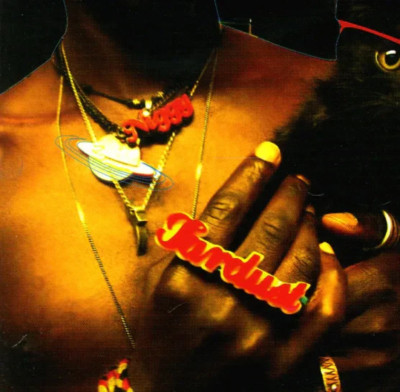
Saul Williams and Trent Reznor made one of the most audacious rap albums ever recorded. Almost nobody noticed.
Saul Williams·Released 2007·Industrial Hip-Hop / Avant-Garde 9/10
Industrial hip-hop Political rap Avant-garde Production 9.5
Lyricism 9.5
Cohesion 8
Replay value 9
In the fall of 2007, Trent Reznor posted a link on the Nine Inch Nails website urging fans to pay attention to an album he’d just produced. “Saul’s not the household name that Radiohead is,” he wrote, fully aware that the pay-what-you-want release format would draw comparisons to In Rainbows. He wasn’t wrong about the name recognition gap. And that’s exactly the problem — because The Inevitable Rise and Liberation of Niggy Tardust is one of the most ferociously original, intellectually charged rap records of its era, and most people still haven’t heard it.
Saul Williams is a poet first. Born from the slam poetry world and carrying a film degree from NYU, he’s never rapped the way rappers are supposed to rap. His earlier records wore those roots openly — extraordinary lyricism sitting on top of production that often felt secondary. What Reznor brought to this collaboration was a sonic identity worthy of the words: a dense, churning wall of industrial noise, machine-gun percussion, and smoldering electronic textures that somehow still leave room for Williams to breathe.
“The moment the chaotic machine-gun drums of ‘Black History Month’ assault your eardrums, it’s obvious this isn’t your average hip-hop album.”
The title track: a mythology in miniature
“NiggyTardust” — the song — is the philosophical center of the record and one of its strangest, most rewarding moments. Named after David Bowie’s alien rock messiah, Niggy is Williams’ own alter ego: a “Ghetto Gothic millionaire,” a “comical absurdist,” a character who exists precisely to pull at the threads of race, identity, celebrity, and authenticity all at once. Where Bowie used Ziggy to deconstruct rock stardom, Williams uses Niggy to dismantle American blackness as a performed, commercialized, and weaponized construct.
The track operates as both a spoken-word portrait and a sly piece of satire. Williams flips call-and-response — “When I say Niggy, you say nuthin'” — into a meditation on language and power. The apparent jab at 50 Cent (“White people call him Curtis”) is funny on the surface and devastating underneath. Underneath all the wordplay is a genuinely unsettling question: who gets to name us, and what does that name cost?
Reznor’s fingerprints are everywhere — and that’s a gift
Reznor produced every second of this record, and you feel it. Tracks like “Convict Colony” and “Black History Month” hit with the thumping, mechanical fury of peak Nine Inch Nails. “No One Ever Does” pivots into soft piano-driven territory that reveals an unexpected tenderness in Williams’ voice — nasal, restrained, surprisingly moving. “The Ritual” marries restrained industrial beats to some of Williams’ most militant couplets. And “Tr(n)igger” loops shards of Public Enemy’s “Welcome to the Terrordome” into a politically explosive meditation on systemic violence, with Williams chanting “The trigger is you / The nigger is you” over a beat that feels like an alarm that won’t stop.
The U2 cover — “Sunday Bloody Sunday” — shouldn’t work. It does, completely. Williams strips the song of its arena-rock bombast and re-contextualizes it as a piece of diasporic protest music. It’s the kind of move that only makes sense in retrospect, and you can’t imagine it being made by anyone else.
Why it matters now
A lot of critics at the time got distracted by the distribution story — Radiohead comparisons, pay-what-you-want economics, download numbers. Only 28,000 of the 154,000 people who grabbed the album in its first two months paid the $5 asking price. The music got lost in the metadata. That’s a shame, because Niggy Tardust was doing sonically and politically what records like Yeezus would get enormous credit for half a decade later — and doing it with sharper writing and more coherent conviction.
All Music gave it 4.5 out of 5 and called it Williams’ finest moment — and one of Reznor’s too. That’s not hyperbole. This is a record that holds up: abrasive where it needs to be, quietly devastating when it slows down, and lyrically as dense and rewarding as anything in the rap canon. It was uneven by design, by ambition. The rough edges are the point.
Essential tracks
Black History Month Start here. Don’t say you weren’t warned.
Tr(n)igger Public Enemy sample + political devastation
Sunday Bloody Sunday The cover that shouldn’t work but does
NiggyTardust The record’s mythological core
No One Ever Does The album’s hidden emotional center
The Ritual Industrial minimalism, maximum impact
Bad Magics verdict
A record that arrived too strange for the mainstream and too polished for the underground, Niggy Tardust fell between the cracks of 2007 and never fully clawed its way back out. Seventeen years later it sounds less like a curiosity and more like a blueprint. Saul Williams is one of the most gifted lyricists alive. Trent Reznor is one of the most inventive producers of his generation. Together they made something that didn’t fit anywhere — which is exactly why it fits
MidaZ The BEAST feat. TzariZM & Aahmean – Say Goodbye (prod. by IMAKEMADBEATS)
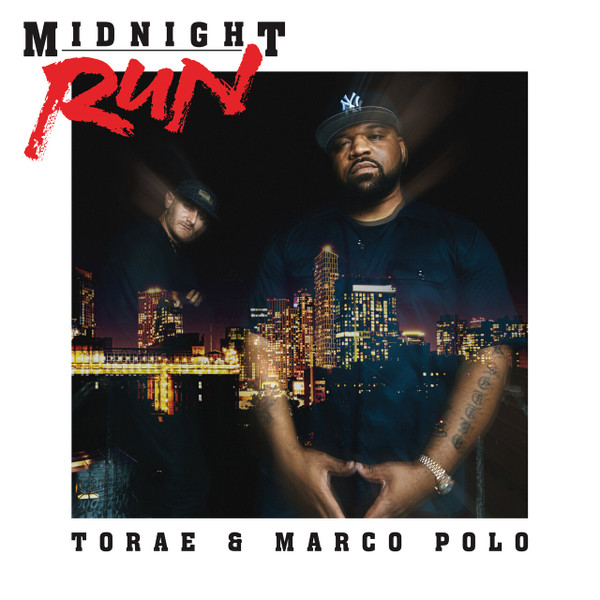
Torae and Marco Polo- Midnight Run
J-live-Money Matters(produced by Odisee)
About The Author
